
An initiative of Discover South Kensington
An initiative of Discover South Kensington
 Historic Royal Palaces
Heating historic buildings is energy-intensive, particularly where environmental conditions must be carefully controlled to protect collections and ensure a comfortable experience for visitors and staff. At Hampton Court Palace, Historic Royal Palaces identified high gas consumption from the boilers serving much of the State Apartments as an opportunity for efficiency improvements, despite limited scope for change.
To reduce emissions and gas use while maintaining strict conservation standards, Historic Royal Palaces implemented a series of carefully monitored adjustments to the heating system at Round Kitchen Court. Boiler flow temperatures were reduced from 78°C to 73°C, alongside updates to the Building Management System to enable responsive adjustments based on external temperatures and to allow changes to be reversed if required.
Further efficiency gains were achieved by briefly switching off individual heating circuits overnight, between 23:30 and 00:30, while closely monitoring environmental conditions using management loggers positioned throughout the palace. This ensured that temperature and humidity levels remained within conservation thresholds and continued to meet the needs of staff and visitors.
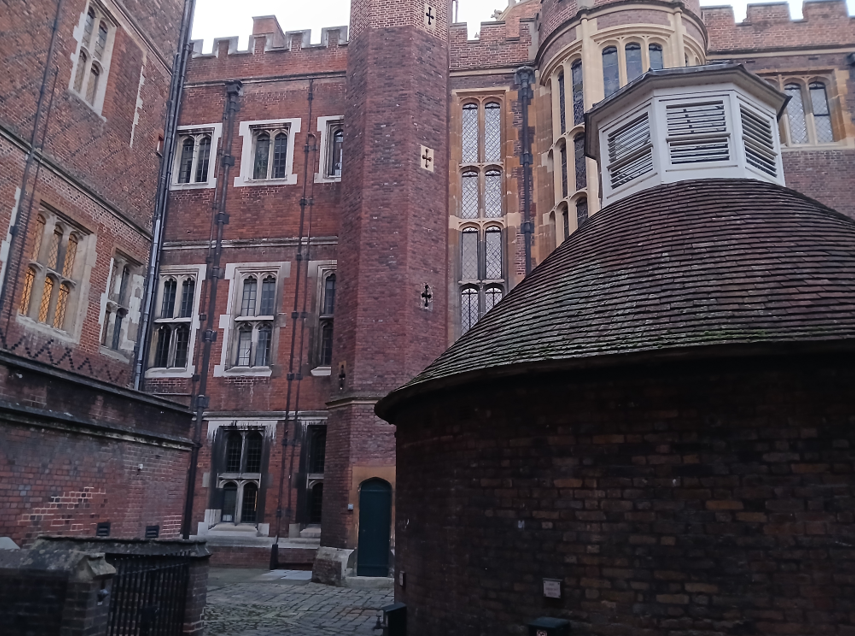
Round Kitchen Court. Once called 'Pheasant Court' as it was where game was roasted for the Tudors... now where school groups meet and boilers can be accessed!
These targeted interventions resulted in gas savings of up to 13%, rising to 16% when normalised for temperature. This equates to a reduction of nearly 150,000 kWh of energy use and approximately 28 tonnes of carbon emissions. The project demonstrates how data-led operational changes can deliver meaningful carbon and cost savings in complex heritage settings, without compromising conservation requirements or visitor experience.
This project also contributes to a growing culture of shared learning across South Kensington. By exchanging knowledge, data and practical experience between neighbouring institutions, organisations are able to test approaches, learn from each other’s successes and constraints, and apply proven solutions in their own contexts. This collaborative approach helps accelerate progress on carbon reduction and sustainability, particularly in complex settings such as historic buildings.
